

 Learning Dutch
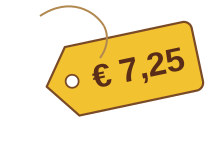
At the till the cashier says: vierenvijftig euro vijfentwintig. You hear four first, then fifty. In Dutch the small number comes first, like the old English nursery rhyme with its four-and-twenty blackbirds. Once you know that, you'll never pay 45 when it's 54.
Short answer: above twenty you say the units first, then en (and), then the tens: vijfenveertig is 45. You write it as one word. For a price you say the euros first, then the cents, without the word cent: drie euro vijftig is €3.50, which Dutch writes as € 3,50.
1 The numbers up to thirty
| Number | Dutch |
|---|---|
| 1 | (or één) |
| 2 | |
| 3 | |
| 4 | |
| 5 | |
| 6 | |
| 7 | |
| 8 | |
| 9 | |
| 10 |
| Number | Dutch |
|---|---|
| 11 | |
| 12 | |
| 13 | |
| 14 | |
| 15 | |
| 16 | |
| 17 | |
| 18 | |
| 19 | |
| 20 |
| Number | Dutch |
|---|---|
| 21 | |
| 22 | |
| 23 | |
| 24 | |
| 25 | |
| 26 | |
| 27 | |
| 28 | |
| 29 | |
| 30 |
Teacher tip Één with accents is the number, een without them is usually the article a: een appel is an apple, één appel, niet twee is one apple, not two.
2 Above twenty: the units first
| Number | Dutch | Word for word |
|---|---|---|
| 21 | one-and-twenty | |
| 45 | five-and-forty | |
| 54 | four-and-fifty | |
| 22 | two-and-twenty | |
| 83 | three-and-eighty |
After twee and drie two e's meet. That's why the second one gets two dots, a trema: tweeëntwintig. And watch eighty: 80 is tachtig, with a t in front, while 8 is plain acht.
3 Hundreds and thousands
| Number | Dutch |
|---|---|
| 100 | |
| 150 | |
| 275 | |
| 1.000 | |
| 2.500 | (or , twenty-five hundred) |
Where English says a hundred or one thousand, Dutch just says honderd and duizend. Up to a thousand, a number is one long word.
4 Saying a price
| Price | Dutch |
|---|---|
| € 3,00 | |
| € 3,50 | |
| € 1,50 | , or (one and a half euros) |
| € 0,45 | |
| € 54,25 |
Teacher tip In a price euro stays singular: drie euro, three euros. And the marks swap places compared with English: a comma between the euros and the cents (€ 3,50), a point between the thousands (€ 1.250).
5 At the till
Ans, at the tillDat is dan zeven euro vijfentwintig.That will be seven euros twenty-five.
VivianKan ik pinnen?Can I pay by card?
Ans, at the tillJa hoor. Wilt u de bon?Sure. Would you like the receipt?
VivianNee, dank u. Ik moet snel naar mijn les bij TaalTaal.No, thank you. I have to hurry to my class at TaalTaal.
Ans, at the tillO, daar woon ik naast! Veel plezier, en tot de volgende keer.Oh, I live right next door to it! Have fun, and see you next time.
| Dutch | Meaning |
|---|---|
| Wat kost het? | How much is it? |
| pinnen, contant | to pay by bank card, in cash |
| een tientje, een briefje van twintig | a tenner, a twenty-euro note |
| de bon | the receipt |
| in de aanbieding | on offer, cheaper for a while |
Pay in cash and the till rounds to five cents: € 7,23 becomes € 7,25. Hardly anyone in the Netherlands still has one- or two-cent coins, and most people pay by card anyway, even for one coffee.
Tip for your language partner Take the supermarket leaflet. The partner points at an offer, the learner says the price. One focus: the numbers above twenty, with the units first. If the learner says 54 for 45, the partner simply points at it again.
After our Basic Dutch 1 course you know your numbers.
Test yourself
The cashier says achtenzestig euro. How much is that?
€ 68. Eight first, then sixty.
How do you say € 22,95?
Tweeëntwintig euro vijfennegentig.
How do you say € 3,00?
Drie euro. In a price, euro stays singular.
You see € 1.250 on a price tag. Is that a little over a euro?
No: twelve hundred and fifty euros. In Dutch the point separates the thousands, the comma the cents.
 You'll learn more about this in the course Basic Dutch 1 (A0-A1)