



 Learning Spanish
About 480 million people speak Spanish as their native language, from Madrid to Mexico City and from Buenos Aires to Los Angeles. It's a rewarding language to learn: you say what you see, and with five vowels everything sounds clear. So why do you lose the thread in your first real conversation? Because Spanish sounds fast, and because the verb changes for every person and every tense.
In short: you pronounce Spanish as you write it, with five clear vowels, and you know many words already from food, music and other Latin languages. What takes time are the verbs (a form for every person, and two past tenses), two words for "to be" (ser and estar) and the rolled rr. The biggest obstacle is the speed: once you learn to listen to fast Spanish, you dare to talk back.
1 Spanish in numbers
Sources: Ethnologue 2026 · Spanish Ministry of Foreign Affairs (2014) · US Census Bureau, ACS 2025 · RAE, fonemas y letras
2 Where Spanish is spoken
Click a place, in the cloud or on the map.
Spain Where Spanish began, in Castile: that's why it's also called castellano. The constitution makes it the official language of the whole country; in Catalonia, Galicia and the Basque Country, Catalan, Galician and Basque are official too.
Mexico The country with the most Spanish speakers in the world: about 130 million people speak it as their native language.
Colombia After Mexico the largest Spanish-speaking country, with about 52 million native speakers.
Argentina About 46 million native speakers: almost everyone in the country.
United States Almost 45 million people speak Spanish at home; no country outside the Spanish-speaking world has more.
Peru For 86 per cent of the people Spanish is the native language: about 30 million.
Venezuela About 29 million native speakers. Curaçao lies only some 65 kilometres off the coast.
Chile About 18 million native speakers, from the desert in the north to Tierra del Fuego in the south.
Guatemala For over three quarters of the people Spanish is the native language.
Ecuador About 17 million native speakers, 94 per cent of the people.
Cuba For 99 per cent of the people Spanish is the native language.
Bolivia For 80 per cent of the people Spanish is the native language.
Dominican Republic About 10 million native speakers, on the island the country shares with Haiti.
Puerto Rico A territory of the United States, where 95 per cent of the people speak Spanish as their native language.
Equatorial Guinea The only Spanish-speaking country in Africa: for about three quarters of the people Spanish is the native language.
Add Honduras, El Salvador, Nicaragua, Costa Rica, Panama, Paraguay and Uruguay: together 21 countries and territories where Spanish is the official or main language. And one in ten native speakers lives outside the Spanish-speaking world, most of them in the United States. (Figures per country: Instituto Cervantes, El español: lengua para el mundo, 2026.)
There is no single Spanish. In most of Spain the z, and the c before an e or i, sounds like the English th; in Latin America and on the Canary Islands like an s. Both are good Spanish, says the Real Academia Española itself. Pick one and stick with it.
3 A taste of Spanish
Spanish words you hear every day, and a few that many languages simply don't have. Click a word to taste it.
Click a word to taste it.
ojalá Hopefully, if only. It comes from the Arabic of Spain: wa šá lláh, and God has willed it.
sobremesa Staying at the table after a meal to talk, sometimes longer than the meal itself. Many languages have no word for it.
vale OK, fine: in Spain you hear it in every conversation, sometimes twice in a row.
madrugada The hours after midnight until morning: whoever gets home at four came home in the madrugada.
pues Well, so, um: the little word to start with, think with or buy time.
estrenar To use or wear something for the first time. ¿Estrenas zapatos? New shoes?
merienda The afternoon snack, for children and grown-ups alike.
friolero Someone who feels the cold easily. One word for what English needs a sentence for.
tocayo Someone with the same first name as you: your namesake.
mañana Tomorrow, but also the morning: mañana por la mañana is tomorrow morning.
ahorita In Mexico "right away": which can mean in a minute, or in an hour.
chévere Cool, great: in Venezuela, Colombia and the Caribbean.
¡qué va! No way! Not at all! A cheerful no.
puente A bridge, and also a long weekend: when a holiday falls on a Thursday, you take the Friday off too, hacer puente.
4 A daughter of Latin, with Arabic words
Spanish, Portuguese and Italian are sisters: all three grew out of the Latin of the Romans. Put their everyday words side by side and you see the same Latin everywhere. Portuguese is the closest sister: if you know Spanish, you can already read a lot of Portuguese.
 Portuguese |  Spanish |  Italian |
|---|---|---|
| água | agua | acqua |
| casa | casa | casa |
| pão | pan | pane |
| noite | noche | notte |
| livro | libro | libro |
| amigo | amigo | amico |
| beber | beber | bere |
| falar | hablar | parlare |
What sets Spanish apart is Arabic. For centuries Arabic was spoken in much of Spain, in al-Andalus, and you can still hear it: hundreds of Spanish words come from Arabic, often with the Arabic article al- still attached, like almohada (pillow), alcalde (mayor) and almacén (warehouse).
Spain has other languages too. Catalan and Galician are Romance sisters of Spanish, but Basque is related to no other known language: in all of Europe it is the only one like that.
The grammar is that of a Romance language: two genders (el libro, la casa), no cases, and a verb with its own form for every person: hablo, hablas, habla, hablamos, habláis, hablan. Because the form already says who does it, a Spaniard often leaves out the subject: hablo español is "I speak Spanish".
5 Words that travelled
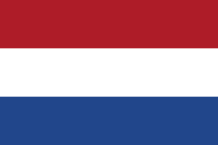
Spain and the Low Countries were bound together for centuries, in war and in trade: the Dutch national anthem still sings "the King of Spain I have always honoured". Words travelled both ways. And through Spanish, words from the Americas came to Europe: chocolate, cocoa, tomato and hurricane.
Languages that borrowed from Spanish
| Dutch | siësta, fiësta, armada, junta, cacao, chocolade; through Spanish from American languages mais (maize), orkaan (huracán) and hangmat (hamaca, which Dutch turned into a "hanging mat"); and through French or English sigaar, vanille, tomaat, guerrilla (a little war), macho, patio and embargo |
Languages Spanish borrowed from
| Arabic | almohada (pillow), aceite (oil), aceituna (olive), azúcar (sugar), arroz (rice), naranja (orange), alcalde (mayor, from qāḍī, judge), almacén (warehouse), algodón (cotton), ajedrez (chess), aduana (customs), hasta (until) and ojalá (hopefully) |
| Dutch | dique (dyke), pólder, escaparate (shop window, from schaprade, a cupboard), bóer, flamenco (in Spanish also a Fleming, from Dutch Vlaming); and through French babor (port side, from bakboord), kermés (fair, from kermis), chalupa (from sloep), amarrar (to moor, from aanmarren) and bloque (block) |
6 How Spanish sounds

You pronounce Spanish as you write it, with five clear vowels. A few letters work differently from English, and Javier lets you hear them: click to listen.
| A question or exclamation gets its mark at the front too, upside down: ¿ and ¡. | |
| B and v sound exactly the same in Spanish. | |
| Pero (but) with a single tap of the tongue, perro (dog) with a rolled rr; at the start of a word the r rolls too. | |
| The z, and the c before an e or i: in most of Spain like the English th, in Latin America like an s. | |
| You never say the h: hoy sounds like "oy". | |
| The j is a rough sound at the back of your throat, like the ch in Scottish loch. | |
| In most regions the ll sounds like an English y: "yave", "caye". | |
| The ñ sounds like the ny in canyon. |
7 How hard is Spanish? It depends on your language
Spanish is one of the friendlier languages to start with: you say what you see, there are only five vowels, and you know many words already through French, English and food. What takes time is the grammar: every verb has six forms in the present tense alone, the two past tenses are divided differently from English, and there are two words for "to be". What comes easily and what takes practice depends on the language you come from:
| Your language | What helps | What takes practice |
|---|---|---|
| Dutch | A spelling without surprises, and familiar words: siësta, fiësta, patio, chocolade. | The rolled rr, ser and estar, the two past tenses, and el or la. |
| English | Many words from Latin: importante, posible, universidad. | Pure vowels without a glide (no isn't "noh-oo"), the rolled r, and ser and estar. |
| Italian | A sister: almost everything is close, the words, the grammar and the vowels. | False friends: burro is a donkey in Spanish and butter in Italian. And the j, which Italian doesn't have. |
| Portuguese | The closest sister: many words and the same grammar. | In Spanish every vowel is said in full, also at the end of a word, and there are no nasal vowels. |
| French | The words, the two genders, and a subjunctive you already know. | Saying every letter, the rolled r, and the j. |
| Arabic | Hundreds of words: aceite, azúcar, ojalá. And the j, close to the Arabic خ. | The p, which Arabic doesn't have (pan, pero), and the e and the o. |
| Turkish | A spelling that follows the sound, and clear vowels, as in Turkish. | El or la (Turkish has no gender), and the verb that doesn't come last. |
| Japanese | Five vowels that are very close, and many words that end in a vowel. | The l and the r, one sound in Japanese, and the rolled rr. |
8 "They talk so fast!"
This is what we hear most. In class it goes well, but at a Spanish market or in a Mexican restaurant the words run together, and before you know it the conversation is over. On top of that every country sounds different: if you learned in Madrid, you need a moment to get used to Buenos Aires or Mexico City. The good news: most Spaniards and Latin Americans love it when you try their language, and happily slow down a little.
Seller¡Buenos días! ¿Qué le pongo?
YouPerdone, ¿podría hablar más despacio? Estoy aprendiendo español.
Seller¡Claro! ¿Qué… le… pongo? ¿Qué quiere?
YouMedio kilo de tomates, por favor.
Seller¡Muy bien! ¿Algo más?
What helps:
- Say you're learning. Estoy aprendiendo español: most people then slow down, and gladly help you along.
- Ask them to speak more slowly: ¿Podría hablar más despacio, por favor? It isn't rude, it's an invitation.
- Pick one Spanish to get used to, then listen to the others: the news from RTVE in Spain, or BBC Mundo for Latin America.
- Listen with Spanish subtitles: a series or the news, and read along with what you hear.
- Talk every week: in a group or with a teacher. You learn to speak by speaking, even when it still stumbles.
Tip for your language partner Is your partner a Spanish speaker? Agree on one Spanish evening a week: cooking, eating and talking in Spanish, without jumping in with the English word. And ask for a pace you can follow: más despacio, por favor is nothing to be ashamed of.
9 Where people get stuck
| What's hard | What helps (our articles, in Dutch) |
|---|---|
| Two words for "to be": soy de La Haya, but estoy en Madrid | Ser of estar? |
| Two past tenses: comí or comía | Indefinido of imperfecto? |
| Two words for "for": por or para | Por of para? |
| Me gusta: in Spanish something "pleases" you | Me gusta |
| Formal or informal: tú or usted | Tú of usted? |
| There is: hay or está | Hay of está? |
| Pronunciation: the j, the ll, the ñ, the z and the rr | Spaanse uitspraak |
| Reflexive verbs: me levanto, me ducho | Me levanto, me ducho |
| Ordering: quería, me pone | Bestellen in het Spaans |
| False friends: embarazada means pregnant, not embarrassed | Valse vrienden in het Spaans |
Teacher tip Learn the verbs in sentences about yourself: soy de La Haya, estoy en casa, tengo dos hijos. Once you use ser, estar and tener fluently in sentences you say every day, you have the base of almost any conversation.
10 Why people in The Hague learn Spanish
Spanish is a language you usually learn because you want to. The reasons keep coming back:
- Holidays and a second home: Spain every year, and wanting more than una caña, por favor.
- A partner and family: in-laws in Seville, Bogotá or Buenos Aires, and children growing up bilingual.
- Travelling through Latin America: from Mexico to Patagonia with one language.
- Work: colleagues and clients in Spain and Latin America.
- Your roots: a Spanish or Latin American parent. And if you come from Aruba or Curaçao, you already hear a lot of Spanish in Papiamento.
11 Learning Spanish at TaalTaal
At TaalTaal you learn Spanish in a small group or privately, in The Hague and online. The route runs from Spanish Básico 1, for real beginners, through Intermedio, Avanzado and Superior to Maestría (C1); there are also groups with all explanations in English, and a Conversación & Gramática group. Not sure where you fit? See the Spanish courses or book a free intake.
Language fact Only Spanish puts a question mark at the front too, upside down: ¿Qué hora es? The Real Academia Española introduced it in 1754, along with the upside-down exclamation mark: ¡Qué bien! That way you know at the start of the sentence that a question or an exclamation is coming. And the ñ? It's a shortened double n: medieval scribes put a stroke over a single n instead of writing nn.
Test yourself
How many people speak Spanish as their native language?
About 480 million; in all, some 560 million people speak Spanish.
In which country in Africa is Spanish the official language?
In Equatorial Guinea, the only Spanish-speaking country in Africa.
What's the difference between pero and perro?
Pero means but, with a single tap of the tongue; perro means dog, with a rolled rr.
Where does ojalá come from?
From the Arabic of Spain: wa šá lláh, and God has willed it. Now it means: hopefully.
How do b and v sound in Spanish?
Exactly the same. Vaca (cow) and baca (roof rack) sound alike.
Finish the sentence: ¿Podría hablar más ..., por favor?
Despacio: could you speak more slowly?
 You'll learn more about this in our Spanish course